Loompad is the original form of what is now Textile. The tactile interface and its history continue there, alongside support for opening and selecting from raw Lync histories. This page keeps the story of where it began.
I couldn’t sleep. It was New Year’s Eve 2024 and I wanted to loom in bed — that feeling of being up late under the covers with a flashlight and a book, except the book branches. None of the existing tools had the right feel. They were all config menus and horizontal graph layouts. I wanted something tactile, like a Game Boy.
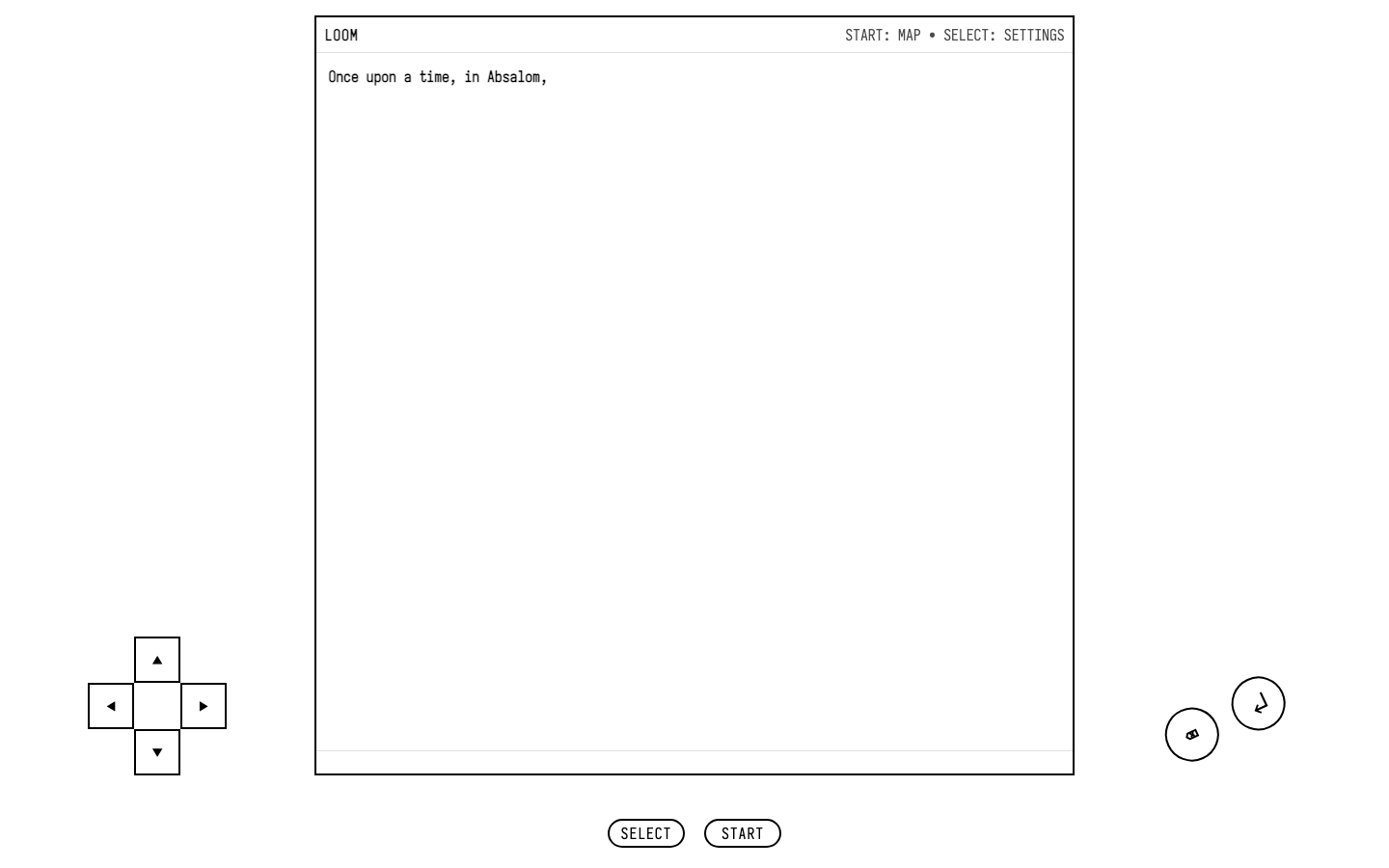
Most looms lay the tree out left to right. But when you’re reading, text flows down. So: up and down move through the story, left and right switch between sibling branches, one big button generates more. D-pad, A button, B button. On a keyboard, arrow keys and a couple of satisfying buttons to thwack.
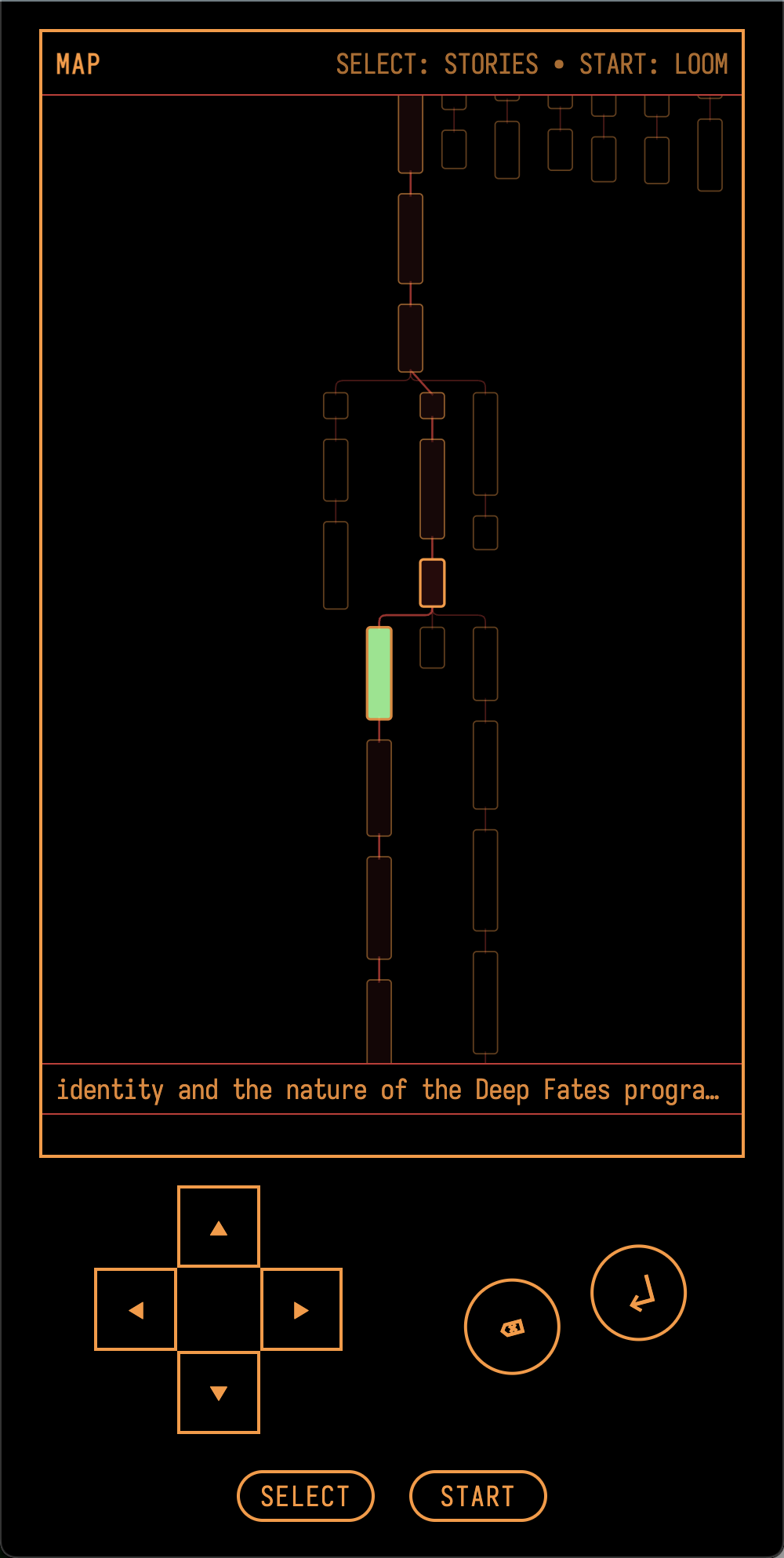
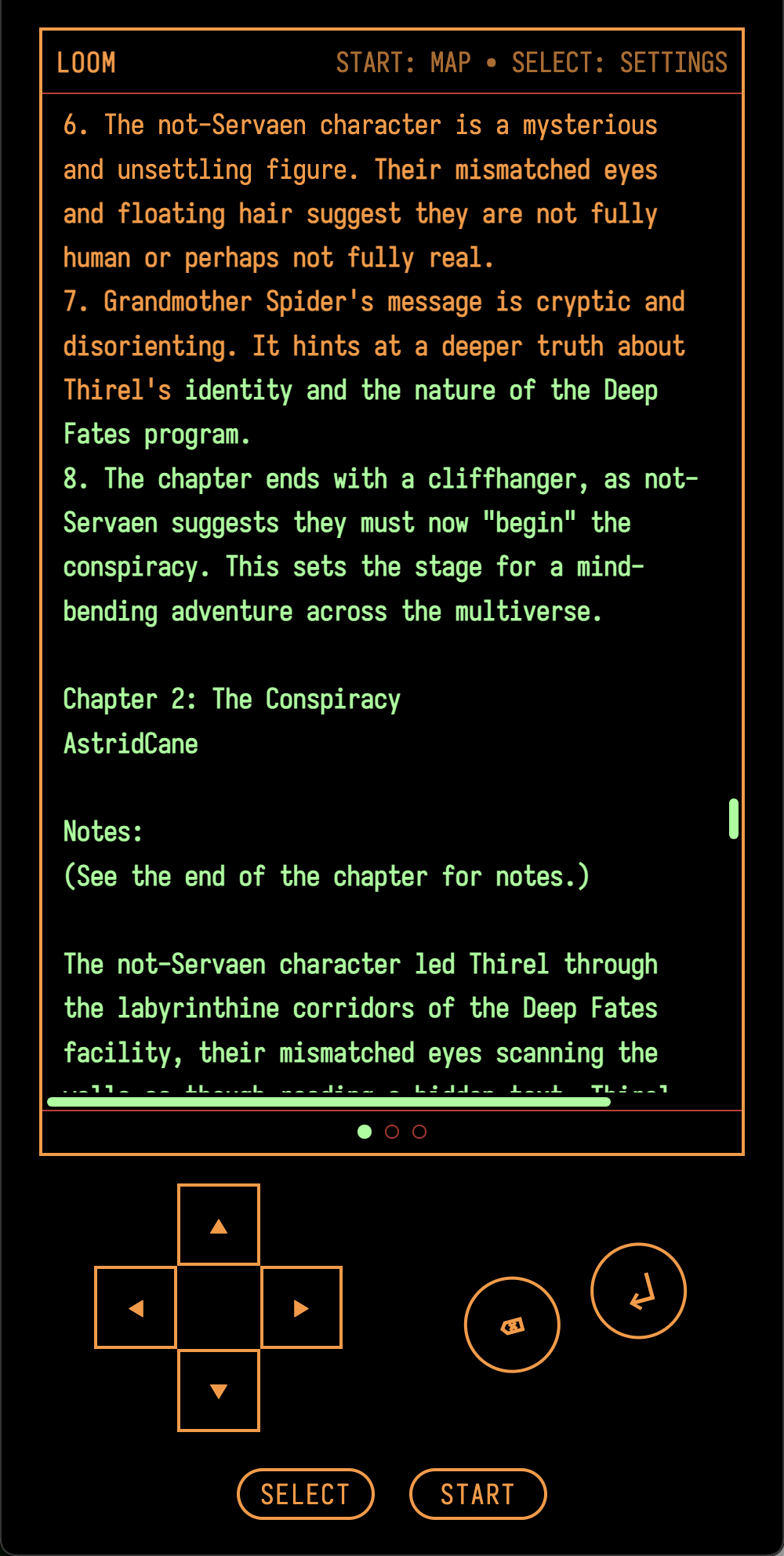
The interface uses the completions API, not chat. No system prompt, no message array — just the raw concatenated text from root to cursor sent as a completion. The default models are base models: DeepSeek V3.1, Llama 405B.
In October I added autoloom. The model generates three completions from the current leaf. Then the model judges which is best. The winner becomes the new leaf. Generate three more. Judge again. Repeat. The model’s distribution gets applied to its own outputs and compounded. An entity arises.
I left it running overnight with DeepSeek-V3.2 and woke up to The Shoggoth at the Gate — a 16,000-word treatise on AI’s relationship to humanity. The model adopted my voice, structured it into chapters with a table of contents, and wrote a philosophical meditation on the shoggoth versus the mask. I did not prompt it to do any of this. It just loomed.
I tested it on janus’s text and hit straight up demonspace. The model generated a “Loom-instructor” demanding malevolent willpower, sorcerous materials, a dark lord, and a wife. The eternal return of my oldest meme: “lol i should teach computers to do magic.”
I fed a short description of Cantrip into the autoloom and Llama 405B wrote a whole manifesto about spellbooks and summoning circles and leaky abstractions. I ran it through an AI detector: “100% Human Written.”